Bike Size Guide: Finding Your Perfect Fit (Updated 04/21/2026)
Navigating bike sizing can be complex! This comprehensive guide, updated today, will help you discover the ideal fit, considering various charts and measurements.
Embarking on the cycling journey begins with finding the right size bike. It’s not a one-size-fits-all scenario; proper sizing dramatically impacts comfort, efficiency, and overall enjoyment. Numerous resources, like those from ICAN Cycling and iSinwheel, emphasize the importance of a well-fitted bike. Sweet Pete’s Bike Shop Toronto highlights charts tailored for men, women, and children, acknowledging diverse body types.
Understanding that bike sizes vary by type – road, mountain, hybrid – is crucial. This guide aims to demystify the process, providing a clear pathway to selecting a bike that complements your physique and riding style. Ignoring proper sizing can lead to discomfort, injury, and a less-than-optimal cycling experience.
Why Bike Size Matters
A correctly sized bike is paramount for a safe and enjoyable riding experience; An ill-fitting bike can cause strain, leading to discomfort and potential injuries. Proper sizing maximizes power transfer, allowing you to ride more efficiently and with less effort. Resources like ICAN Cycling and iSinwheel underscore this connection between fit and performance.
Sweet Pete’s Bike Shop Toronto reinforces that different body types require different sizes, emphasizing the need for tailored charts. Beyond comfort, the right size enhances control and handling, boosting confidence on the road or trail. Investing time in finding the correct fit is an investment in your cycling well-being and enjoyment.

Key Measurements for Bike Sizing
Accurate measurements are the foundation of finding your perfect bike fit. Height is a starting point, but inseam is crucial for standover clearance and saddle height. iSinwheel Official Store highlights the importance of both measurements for selecting the appropriate frame size. For road bikes, arm length plays a vital role in handlebar reach and overall comfort.
These measurements, as emphasized by various sources including ICAN Cycling and Sweet Pete’s, ensure optimal biomechanics. Taking precise measurements, or even better, getting assistance from a professional, will significantly improve your chances of selecting a bike that fits you well and prevents discomfort or injury.
Height
Your height serves as an initial guide when determining bike size, but it’s rarely the sole determining factor. Bike size charts, like those offered by ICAN Cycling and Sweet Pete’s Bike Shop, typically begin with height ranges to suggest a starting frame size. However, individual proportions vary significantly.
Riders with longer or shorter torsos and limbs will require adjustments beyond what height alone suggests. iSinwheel Official Store also acknowledges height as a key input, but stresses the need for additional measurements. It’s best to view height as a general reference point, not a definitive answer.
Inseam
Inseam is a crucial measurement for accurate bike sizing, often considered more reliable than height alone. It represents the distance from your crotch to the floor while standing with shoes on. ICAN Cycling and iSinwheel Official Store both highlight inseam as a vital component in their bike size charts.
This measurement directly correlates to the appropriate standover height of the bike frame, ensuring safe and comfortable riding. Sweet Pete’s Bike Shop emphasizes using inseam to refine size selection. Accurate measurement is key – have someone assist you for best results, and always wear cycling shoes!

Arm Length (for Road Bikes)
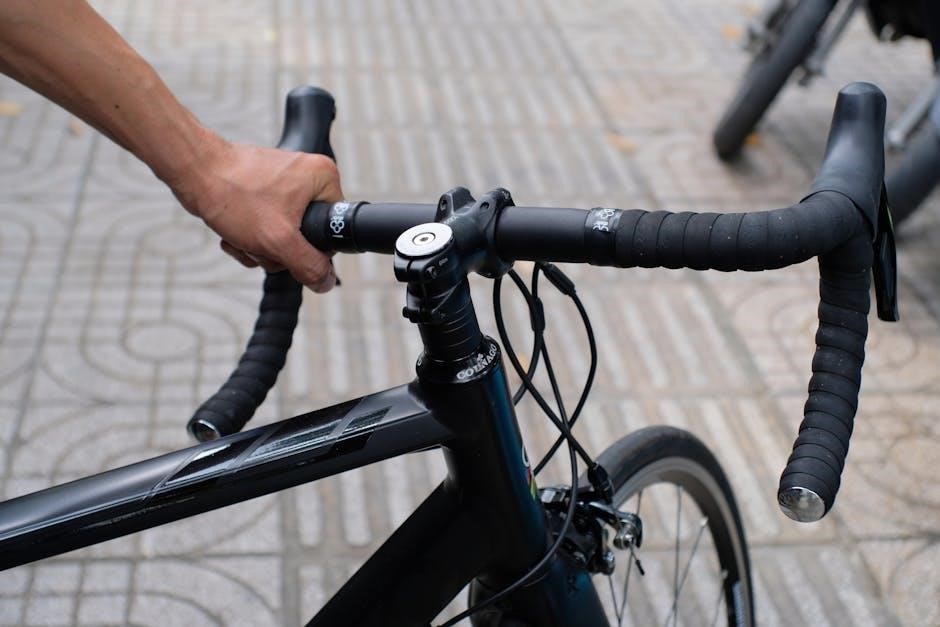
For road bikes, arm length plays a significant role in determining reach and handlebar positioning, impacting comfort and control. While not universally emphasized like height or inseam in the provided resources, it’s a critical factor for optimizing aerodynamics and preventing strain.
A longer arm length generally suggests a need for a longer reach on the bike. This measurement, taken from the center of your chest to your fingertips while extended, helps ensure proper fit. Considering arm length alongside other measurements, like inseam, contributes to a more personalized and efficient riding experience.
Bike Size Charts by Bike Type
Different bike types necessitate distinct sizing approaches. A road bike prioritizes aerodynamics and efficiency, demanding a more precise fit than a mountain bike, built for varied terrain and control. Hybrid bikes offer a balance, requiring a comfortable, versatile size.
Resources like ICAN Cycling, iSinwheel, and Sweet Pete’s Bike Shop highlight the importance of bike-specific charts. Women’s bikes often feature geometry tailored to female anatomy, while kids’ bikes prioritize safety and ease of handling. Utilizing the correct chart—road, MTB, hybrid, women’s, or kids’—is crucial for finding your perfect fit.
Road Bike Size Chart
Road bike sizing focuses on efficiency and power transfer. Charts typically correlate rider height with frame size, often expressed in centimeters or inches (e.g., 54cm, 56cm). However, inseam is equally vital, influencing standover height and reach.
Consider your arm length for optimal handlebar positioning. A proper fit minimizes strain and maximizes control. Resources like ICAN Cycling provide detailed road bike size charts. Remember, these are starting points; individual preferences and flexibility play a role. A professional bike fit is recommended for fine-tuning, ensuring optimal performance and comfort on long rides.
Mountain Bike (MTB) Size Chart
MTB sizing prioritizes maneuverability and control on varied terrain. Unlike road bikes, reach and stack become crucial, impacting handling and stability. Charts generally link rider height to frame size (small, medium, large, or numerical values). Inseam remains important, but standover clearance is paramount for technical trails.

Consider your riding style – aggressive downhill requires a different fit than cross-country. Online resources, like those from iSinwheel, offer MTB size guides. Remember, a longer reach provides stability at speed, while a shorter reach enhances agility. A professional bike fit can optimize your MTB setup for confidence and efficiency.
Hybrid Bike Size Chart
Hybrid bikes blend road and mountain bike features, demanding a versatile fit. Size charts typically correlate rider height with frame size, often expressed in small, medium, or large. However, inseam measurements are vital for comfortable standover height and efficient pedaling. Hybrid geometry aims for a more upright riding position than road bikes, reducing strain.
Sweet Pete’s Bike Shop Toronto emphasizes the importance of specific charts for men, women, and children. Consider your primary use – commuting, fitness, or leisurely rides – when selecting a size. A slightly larger frame offers stability, while a smaller frame enhances maneuverability. Online tools can assist, but a test ride is invaluable.
Women’s Specific Bike Size Chart

Women’s bikes often differ from unisex models due to anatomical variations. These differences include narrower handlebars, shorter crank arms, and women-specific saddles designed for comfort. Size charts for women prioritize a comfortable reach and efficient pedaling motion, considering typically shorter torso lengths and longer legs relative to men.

Sweet Pete’s Bike Shop Toronto highlights the availability of dedicated size charts for women. Inseam remains a crucial measurement, alongside height, to determine the appropriate frame size. Proper fit minimizes strain and maximizes power transfer. Don’t assume a unisex chart will suffice; explore women’s specific options for an optimized ride.
Kids’ Bike Size Chart
Selecting the right bike for a child is crucial for safety and enjoyment. Unlike adult sizing based primarily on height, kids’ bikes often prioritize inseam and wheel size. Smaller bikes offer better control and confidence for developing riders. Sweet Pete’s Bike Shop Toronto emphasizes the importance of dedicated kids’ size charts.

Generally, wheel size (12”, 16”, 20”, 24”) dictates the appropriate age range and inseam. Avoid “growing into” a bike; a properly sized bike allows feet to comfortably touch the ground. Regularly check the fit as children grow rapidly. Prioritize a lightweight bike for easier handling and maneuverability.
Understanding Frame Size Terminology
Bike frame sizes aren’t always straightforward, utilizing different systems that can be confusing. Manufacturers employ both Small, Medium, Large (SML) sizing and numerical measurements, often in centimeters (cm) or inches. SML is a relative system, varying between brands, so always consult specific size charts.
Numerical sizes represent the seat tube length, measured from the center of the bottom bracket to the top of the seat tube. Understanding these terms is vital for accurate comparison and selection. It’s essential to know which system a retailer uses and how it correlates to your body measurements for a comfortable ride.
Small, Medium, Large (SML) Sizing
SML sizing offers a simplified approach to frame selection, but it’s crucial to remember that these designations are not standardized across all bicycle brands. A “Medium” in one brand might fit differently than a “Medium” from another. This relative system is often used for initial estimations, but precise measurements are still recommended.
Generally, SML corresponds to height ranges, but individual builds and preferences play a significant role. Always refer to the specific brand’s size chart to correlate your height with their SML designations. Don’t solely rely on SML; consider inseam and arm length for optimal fit.
Numerical Frame Sizes (cm or inches)
Numerical frame sizes, expressed in centimeters or inches, provide a more precise measurement than SML sizing. These numbers typically refer to the seat tube length – the distance from the center of the bottom bracket to the top of the seat tube. However, modern bike geometry often complicates this, as effective top tube length is also vital.
Different bike types utilize varying size scales. Road bikes often use centimeters (e.g., 54cm, 56cm), while mountain bikes frequently employ inches (e.g., 17”, 19”). Always consult the manufacturer’s size chart to understand their specific sizing conventions and correlate it with your body measurements for a comfortable ride.
Converting Between Bike Size Systems
Bike sizing isn’t universally standardized, requiring conversions between metric and imperial systems. Understanding these conversions is crucial when comparing bikes from different manufacturers or countries. Generally, a 53cm frame roughly equates to a 17-inch frame, a 56cm frame to 18 inches, and a 58cm frame to 19 inches.
However, these are approximations; variations exist. Always cross-reference with specific brand size charts. Online tools can assist with conversions, but remember they are guides. Prioritize matching your inseam and height to the recommended frame size, regardless of the numerical system used, for optimal comfort and performance.
Metric to Imperial Conversion
Converting from centimeters (cm) to inches is fundamental for understanding bike sizing. A simple rule of thumb is to divide the centimeter measurement by 2.54 to obtain the equivalent in inches. For example, a 56cm frame converts to approximately 22.05 inches (56 / 2.54 = 22.05).
However, bike frame sizes aren’t always a direct conversion. Manufacturers may round measurements, leading to slight discrepancies. Always consult the specific brand’s size chart for the most accurate conversion. Utilizing online conversion tools can also provide a quick estimate, but verifying with the manufacturer’s data remains essential for a precise fit.
Fine-Tuning Your Fit: Beyond Frame Size
Achieving a perfect bike fit extends far beyond simply selecting the correct frame size. Saddle height is crucial; when your pedal is at its lowest point, your leg should be almost fully extended, with a slight bend at the knee. Handlebar reach and stack – the horizontal and vertical distance from the bottom bracket – significantly impact comfort and control.
Adjusting these elements optimizes power transfer and prevents strain. Small adjustments can make a huge difference. Consider stem length and handlebar height to fine-tune your position. Remember, a professional bike fit can provide personalized recommendations for optimal comfort and performance.
Saddle Height Adjustment
Proper saddle height is paramount for efficient pedaling and preventing injuries. A common starting point is to sit on the saddle with your heel on the pedal at the bottom of the stroke; your leg should be nearly fully extended. Then, switch to the ball of your foot and you should have a slight bend in your knee.
Too high a saddle can cause rocking hips and strain, while too low reduces power and efficiency. Incremental adjustments – a few millimeters at a time – are best. Pay attention to how your legs feel during pedaling; smooth and powerful is the goal.
Handlebar Reach and Stack
Handlebar reach and stack significantly impact comfort and control. Reach refers to the horizontal distance from the saddle to the handlebars, while stack measures the vertical difference. These dimensions influence your riding posture and how effectively you can steer and brake.
A longer reach promotes a more aerodynamic position, suitable for racing, but can strain your back. Shorter reach offers greater comfort for recreational riding. Stack affects how upright or aggressive your position is. Adjusting stem length and handlebar height fine-tunes these measurements for optimal fit and performance.
Professional Bike Fitting Services
Investing in a professional bike fit can revolutionize your cycling experience. Experienced fitters utilize advanced tools and biomechanical analysis to assess your flexibility, riding style, and physical attributes. This personalized approach goes beyond basic sizing charts, addressing individual needs and preventing injuries.
A proper fit optimizes power transfer, enhances comfort, and improves overall efficiency. It’s particularly beneficial for cyclists experiencing pain or discomfort, or those seeking to maximize performance. Don’t underestimate the value of expert guidance for a truly tailored and enjoyable ride!
Benefits of a Professional Fit
A professional bike fit delivers a multitude of advantages for cyclists of all levels. Primarily, it minimizes the risk of overuse injuries, such as knee pain, back discomfort, and numbness, by ensuring proper biomechanics. Enhanced comfort translates to longer, more enjoyable rides, allowing you to focus on the experience, not the pain.
Furthermore, a precise fit maximizes pedaling efficiency, boosting power output and overall performance. It optimizes your position for aerodynamics, potentially shaving valuable seconds off your times. Ultimately, a professional fit isn’t just about comfort; it’s about unlocking your full cycling potential!
What to Expect During a Bike Fit
A professional bike fit is a detailed process, typically beginning with a comprehensive interview about your cycling history, goals, and any existing discomfort. Expect a physical assessment of your flexibility, posture, and range of motion. The fitter will then observe you cycling, often using video analysis to identify areas for improvement.
Adjustments are made to saddle height, fore/aft position, handlebar reach and stack, and cleat positioning. Multiple iterations and feedback sessions ensure the fit feels comfortable and efficient. A final report detailing the adjustments and recommendations for future maintenance is usually provided.
Online Bike Size Calculators & Resources
Numerous online tools can provide a starting point for determining your bike size, though they shouldn’t replace a professional fit. ICAN Cycling and iSinwheel Official Store offer helpful bike size charts, guiding you based on height and inseam. These resources often categorize recommendations by bike type – road, mountain, or hybrid.
Sweet Pete’s Bike Shop Toronto provides charts tailored for men, women, and children. Remember these are estimations; individual body proportions and riding style significantly impact the ideal fit. Utilize multiple calculators and compare results for a more informed initial assessment before purchasing.
Popular Online Tools

Several websites offer interactive bike size calculators, simplifying the process of finding your approximate frame size. Competitive Cyclist’s fit calculator is a widely respected resource, asking detailed questions about your body and riding preferences. BikeFit also provides a robust calculator, though it leans towards a more professional fitting approach.
Additionally, many bike brand websites, like those mentioned – ICAN Cycling, iSinwheel, and Sweet Pete’s – incorporate size charts and calculators specific to their models. Remember to cross-reference results from multiple tools and consider them as starting points, not definitive answers. A professional bike fit remains the gold standard.