Instrument Study Guide: An Overview
A comprehensive guide streamlines learning, offering interactive resources and tools for aspiring musicians, encompassing theory, technique, and practical audition preparation.

What is an Instrument Study Guide?
An instrument study guide is a curated collection of resources designed to facilitate effective musical learning. It moves beyond traditional e-learning, offering a structured path for beginners and experienced players alike. These guides typically encompass fundamental music theory – rhythm, notation, and key signatures – alongside instrument-specific techniques.
Crucially, a good study guide isn’t just about information; it’s about application. It incorporates practice strategies, setting realistic goals, and leveraging online platforms like Faststrings.com for video tutorials. Furthermore, it can include recommendations for educational kits, such as those from Learning Resources, to develop essential fine motor skills. Ultimately, a study guide aims to empower musicians to confidently tackle auditions and maintain their instruments.
Why Use a Study Guide for Instruments?
A well-structured instrument study guide combats the overwhelming nature of musical education. It provides a focused learning path, preventing wasted time and frustration. Many encounter audition requirements that demand specific skills; a study guide proactively addresses these needs, building performance confidence.
Moreover, it bridges the gap between theory and practice. By integrating resources like Faststrings.com’s tutorials and Learning Resources’ skill-building kits, it fosters a holistic approach. It also aids in developing crucial fine motor skills, essential for instrument mastery; Ultimately, a study guide empowers learners to become self-sufficient, adaptable musicians, equipped with the tools for continuous growth and success.

Choosing Your Instrument
Selecting an instrument involves considering personal preferences and aptitude, exploring popular options like guitar, piano, and drums to begin your musical journey.
Popular Instrument Choices for Beginners
Guitar consistently ranks as a top choice, offering versatility with acoustic, electric, and bass variations, alongside abundant online resources like those found on Faststrings.com. Its relatively accessible learning curve makes it appealing.
Piano provides a strong foundation in music theory due to its visual layout and ability to play chords and melodies simultaneously. It’s excellent for developing coordination.
Drums are incredibly popular, fostering rhythm and coordination, though space and noise can be considerations. Faststrings.com also offers drum tutorials.
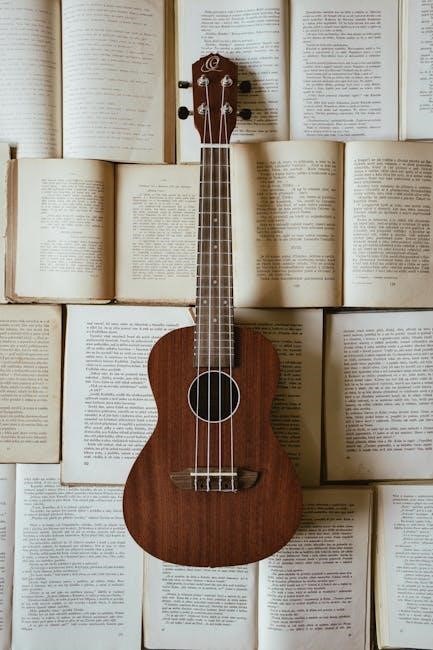
Other options include the ukulele – portable and easy to learn – and the keyboard, a more affordable alternative to a piano. Ultimately, the “best” instrument depends on individual interests and learning style.
Factors to Consider When Selecting an Instrument
Budget is crucial; instruments range dramatically in price, and accessories add up. Consider rental options initially. Personal interest is paramount – choose something you genuinely enjoy to maintain motivation.
Physical considerations matter. Smaller hands might suit ukulele or violin better than guitar. Space is a factor for larger instruments like drums or pianos.
Learning resources availability is vital. Ensure ample tutorials and instruction exist, like those on Faststrings.com. Think about your musical goals – what genre do you aspire to play?
Finally, consider the instrument’s sound and whether it resonates with your aesthetic preferences. Don’t be afraid to try several before committing!
Fundamental Music Theory
Grasping rhythm, notation, and key signatures unlocks musical understanding, forming the bedrock for proficient instrument playing and overall musical expression.
Understanding Rhythm and Timing
Rhythm is the heartbeat of music, and mastering it is crucial for any instrumentalist. It’s more than just keeping a steady beat; it involves understanding note values – whole, half, quarter, eighth, and sixteenth notes – and their corresponding rests.

Timing encompasses how these notes are placed within a measure, guided by the time signature. Practicing with a metronome is invaluable for developing internal timing and consistency.
Subdivision, breaking down beats into smaller units, enhances rhythmic accuracy. Explore concepts like syncopation, where emphasis falls on unexpected beats, adding groove and complexity.
Accurate rhythm and timing aren’t just about technical proficiency; they’re about musicality and creating a compelling performance. Consistent practice builds a strong rhythmic foundation.
Reading Music Notation
Music notation is a universal language for musicians, allowing for precise communication of musical ideas. The staff, comprised of five lines and four spaces, forms the foundation. Notes are placed on these lines and spaces to represent pitch. Understanding the treble and bass clefs is fundamental, dictating the pitch range for different instruments.
Note duration is indicated by noteheads and stems, signifying how long a note is held. Accidentals – sharps, flats, and naturals – alter pitch.
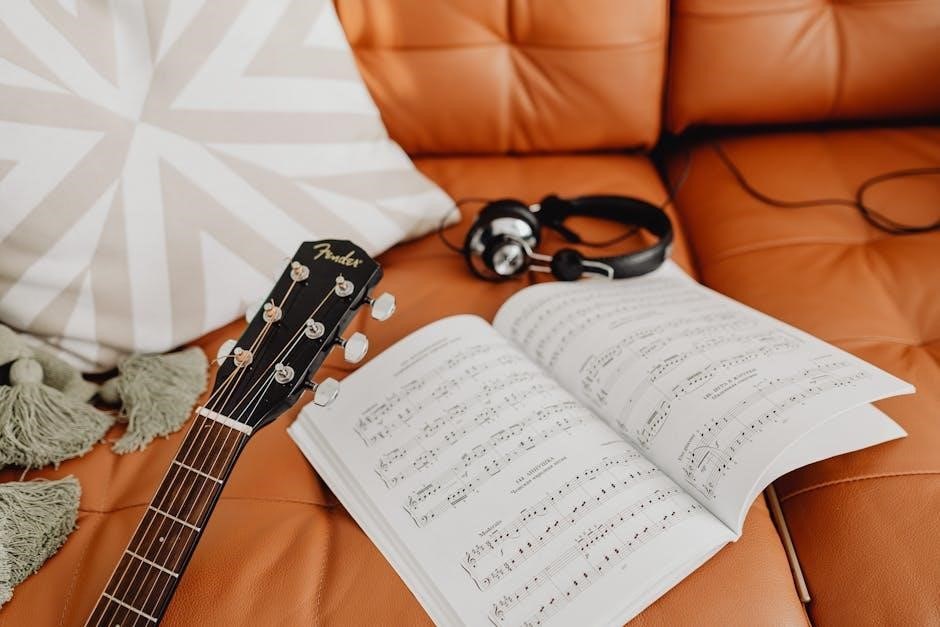
Learning to decipher these symbols unlocks a vast repertoire of music. Consistent practice, starting with simple melodies, builds fluency. Resources like interactive platforms can aid in this process.
Ultimately, reading music empowers musicians to interpret and perform compositions accurately and expressively.
Key Signatures and Scales
Key signatures indicate which notes are consistently sharp or flat throughout a piece, simplifying notation and defining the tonal center. Understanding key signatures is crucial for navigating musical pieces efficiently and accurately. Scales, sequential arrangements of notes within a key, form the building blocks of melodies and harmonies.
Major and minor scales are fundamental, each possessing a distinct character. Learning scale patterns enhances finger dexterity and musical ear training.
Recognizing the relationship between key signatures and scales unlocks harmonic understanding. Online resources and tutorials, like those found on Faststrings.com, can provide valuable guidance.
Mastering scales and key signatures is essential for improvisation and composition.

Instrument-Specific Techniques
Developing proficiency requires focused practice on techniques unique to each instrument—chords for guitar, hand position for piano, and beats for drums.
Guitar Techniques: Chords, Strumming, and Fingerpicking
Mastering the guitar begins with foundational techniques. Chord progressions form the harmonic basis of countless songs, requiring diligent practice for smooth transitions. Strumming patterns add rhythmic drive, evolving from simple downstrokes to complex variations. Resources like Faststrings.com offer video tutorials demonstrating diverse strumming styles.
Fingerpicking introduces a delicate, intricate approach, enabling melodic lines and harmonic textures simultaneously. This technique demands coordination and precision, building dexterity over time. Beginners should start with basic patterns and gradually increase complexity. Consistent practice, coupled with online guidance, accelerates progress. Exploring different tunings expands sonic possibilities, fostering creativity and musical expression. Ultimately, a solid grasp of these techniques unlocks a world of guitar playing potential.
Piano Techniques: Hand Position and Scales
Developing proper hand position is crucial for piano technique, promoting efficiency and preventing injury. A relaxed, curved hand shape allows for fluid movement across the keys. Consistent practice reinforces correct posture and minimizes tension. Scales are fundamental exercises, building finger strength, dexterity, and keyboard familiarity.
Begin with C major, gradually introducing other scales and key signatures. Focus on evenness of tone and rhythm, utilizing a metronome for precise timing. Understanding scale patterns unlocks harmonic understanding and improvisation skills. Online resources can supplement learning, offering visual aids and guided practice. Mastering scales provides a solid foundation for tackling more complex pieces and developing a confident, expressive playing style.
Drumming Techniques: Basic Beats and Rudiments
Establishing a solid foundation in basic beats is paramount for any aspiring drummer. Start with simple rock and pop patterns, focusing on consistent timing and coordination between all limbs. The foundation involves mastering the bass drum, snare drum, and hi-hat interplay. Rudiments, like single strokes, double strokes, and paradiddles, are essential building blocks for developing technique, speed, and control.
Consistent practice of rudiments improves stick control and rhythmic precision. Utilize online resources like Faststrings.com for video tutorials and guidance. Gradually increase tempo and complexity, ensuring accuracy before speed. Understanding rudiments unlocks creative possibilities and allows for more expressive drumming. A strong grasp of basic beats and rudiments is vital for playing in any musical genre.

Practice Strategies
Effective routines, realistic goals, and utilizing online platforms like Faststrings;com are key to progress. Consistent, focused practice yields the best results for musicians.
Effective Practice Routines
Establishing a structured practice routine is paramount for musical development. Begin with warm-up exercises focusing on fundamental techniques specific to your chosen instrument – chords for guitar, scales for piano, or rudiments for drumming. Dedicate specific time slots to address areas needing improvement, breaking down complex passages into smaller, manageable sections.
Consistency is crucial; even short, focused daily sessions are more beneficial than infrequent, lengthy ones; Incorporate varied exercises to maintain engagement and prevent plateaus. Regularly review previously learned material to reinforce skills. Utilize a metronome to develop accurate timing and rhythm.
Don’t solely focus on challenging pieces; include enjoyable repertoire to foster motivation. Record yourself playing to identify areas for refinement. Remember to prioritize quality over quantity, ensuring mindful and deliberate practice.
Setting Realistic Goals
Achieving musical proficiency requires setting attainable goals that foster consistent progress. Avoid overwhelming yourself with ambitious targets; instead, break down larger objectives into smaller, incremental steps. For example, instead of aiming to master a complex piece immediately, focus on learning a specific section each week.
Establish both short-term and long-term goals. Short-term goals provide immediate gratification and maintain momentum, while long-term goals offer a broader vision. Regularly assess your progress and adjust goals as needed. Be patient and acknowledge that learning an instrument takes time and dedication.
Celebrate milestones, no matter how small, to reinforce positive habits. Remember that setbacks are a natural part of the learning process; view them as opportunities for growth and refinement.
Utilizing Online Resources and Tutorials (Faststrings.com)
The internet provides a wealth of resources to supplement traditional learning, and platforms like Faststrings.com offer targeted instruction. Faststrings.com specializes in video tutorials for guitar (acoustic, bass, electric) and drums, providing a vast library of lessons suitable for various skill levels.
These online resources can be invaluable for visualizing techniques, understanding complex concepts, and learning at your own pace. Supplementing your practice with tutorials allows you to explore different approaches and refine your technique.
Remember to critically evaluate the source and ensure the information is accurate and reliable. Combine online learning with personalized instruction for optimal results.
Learning Resources & Tools
Interactive platforms and educational kits, like those from Learning Resources, enhance skill development and fine motor skills crucial for musical instrument mastery.
Interactive Learning Platforms
Modern music education increasingly leverages the power of digital platforms to deliver engaging and effective learning experiences. These platforms often move beyond traditional e-learning systems, offering dynamic content tailored to individual learning styles.
Many platforms provide structured courses, interactive exercises, and personalized feedback, accelerating skill development. They can also incorporate gamification elements to maintain motivation and track progress. Furthermore, these resources frequently offer access to a vast library of musical examples and tutorials.
Platforms designed for launching training and development offer course and test builders, alongside analytical tools. These tools empower educators and students alike, fostering a collaborative and data-driven learning environment. The integration of AI-powered tools is also becoming prevalent, offering customized learning paths and support.
Educational Kits for Developing Fine Motor Skills (Learning Resources)
Developing fine motor skills is crucial for aspiring musicians, particularly when learning instruments requiring dexterity. Kits from companies like Learning Resources offer targeted exercises to enhance these skills before tackling complex techniques. These kits often feature tools designed to improve hand-eye coordination and muscle strength.
Specifically, sets with bright-colored pincers allow children to practice gripping and manipulating small objects, skills transferable to instrument playing. Activities like twisting, scooping, and squeezing build the necessary hand muscles for tasks like fretting guitar strings or pressing piano keys.
These kits prepare young learners for using scissors and writing, foundational skills that directly benefit musical instrument proficiency. Early development of these skills can significantly ease the learning curve and foster a stronger connection with the instrument.
Audition Preparation
Mastering audition requirements and honing performance skills are vital; preparation involves understanding expectations and confidently showcasing musical abilities for desired roles.
Understanding Audition Requirements
Before any audition, meticulous research is paramount. Carefully review all provided materials – often found in the “fine print” – detailing specific pieces, scales, or techniques requested. Understand the stylistic expectations; is it a classical performance, a jazz ensemble, or a contemporary band?
Pay close attention to tempo markings, dynamic ranges, and any specific instructions regarding interpretation. Some auditions may require sight-reading, so practice this skill diligently. Prepare multiple pieces, even if only one is requested, offering flexibility. Knowing the audition panel and the organization’s artistic vision can also provide valuable insight.
Finally, confirm logistical details like attire, arrival time, and any necessary accompanying materials. Thorough preparation minimizes stress and maximizes your chances of success.
Developing Performance Skills
Beyond technical proficiency, captivating performance requires focused development. Regularly practice performing for others – friends, family, or fellow musicians – to build confidence and manage stage fright. Record yourself to identify areas for improvement in posture, expression, and overall presentation.
Work on conveying emotion and storytelling through your music. Consider the narrative of each piece and how to connect with the audience. Develop strong stage presence through deliberate movement and eye contact.
Mental preparation is crucial; visualize a successful performance and practice positive self-talk. Embrace constructive criticism and view each performance as a learning opportunity. Remember, authenticity and passion are key to a memorable performance.
Maintaining Your Instrument
Proper cleaning and careful storage are vital for longevity, preserving sound quality, and preventing damage – ensuring your instrument remains in peak condition.
Cleaning and Storage
Regular cleaning is paramount for all instruments, removing residue that can affect sound and cause corrosion. For stringed instruments, wipe down strings and the body after each use with a soft, dry cloth. Polish wood surfaces periodically with appropriate products, avoiding harsh chemicals. Brass instruments require occasional cleaning with specialized brass polish, followed by thorough rinsing.
Proper storage protects your investment. Always store instruments in their cases when not in use, shielding them from dust, humidity, and temperature fluctuations. Avoid direct sunlight and extreme temperatures. For wooden instruments, a humidifier can help maintain optimal moisture levels, preventing cracking. Percussion instruments should be stored in a dry environment to prevent warping or damage to heads. Consistent care extends the life and playability of your instrument.